
HOAs • Apartments • Warehouses • Truck Yards
Commercial Gate Repair
A commercial gate does not get to have a bad day. When an apartment entrance, distribution yard, or gated community stops moving, the cost is stalled residents, idling trucks, and an unsecured property. We find the specific failure and repair it on site, on both sides of the river.
- High-Cycle Operators
- Barrier Arms
- Service Agreements
- 24/7 Dispatch
Symptoms Worth a Phone Call
Commercial Gates Fail on a Schedule: Usually Yours
Commercial gate failures rarely arrive without warning. An operator asked to run more cycles than its duty rating allows announces the problem for weeks: it slows during the morning rush, its thermal overload trips, and the gate pauses mid-travel while the motor cools. Property managers usually hear about it secondhand, as resident complaints or a driver waiting at a yard entrance at 5 a.m.
The pattern of the failure is diagnostic information. Misbehavior only at peak hours points toward heat or vehicle detection. Failure after a storm points toward power or a waterlogged loop detector or photo eye circuit. Grinding year-round points toward the drive and rollers. When you call, describe when the gate fails, not just that it fails. It shortens the diagnosis considerably.
Call us when you notice any of these:
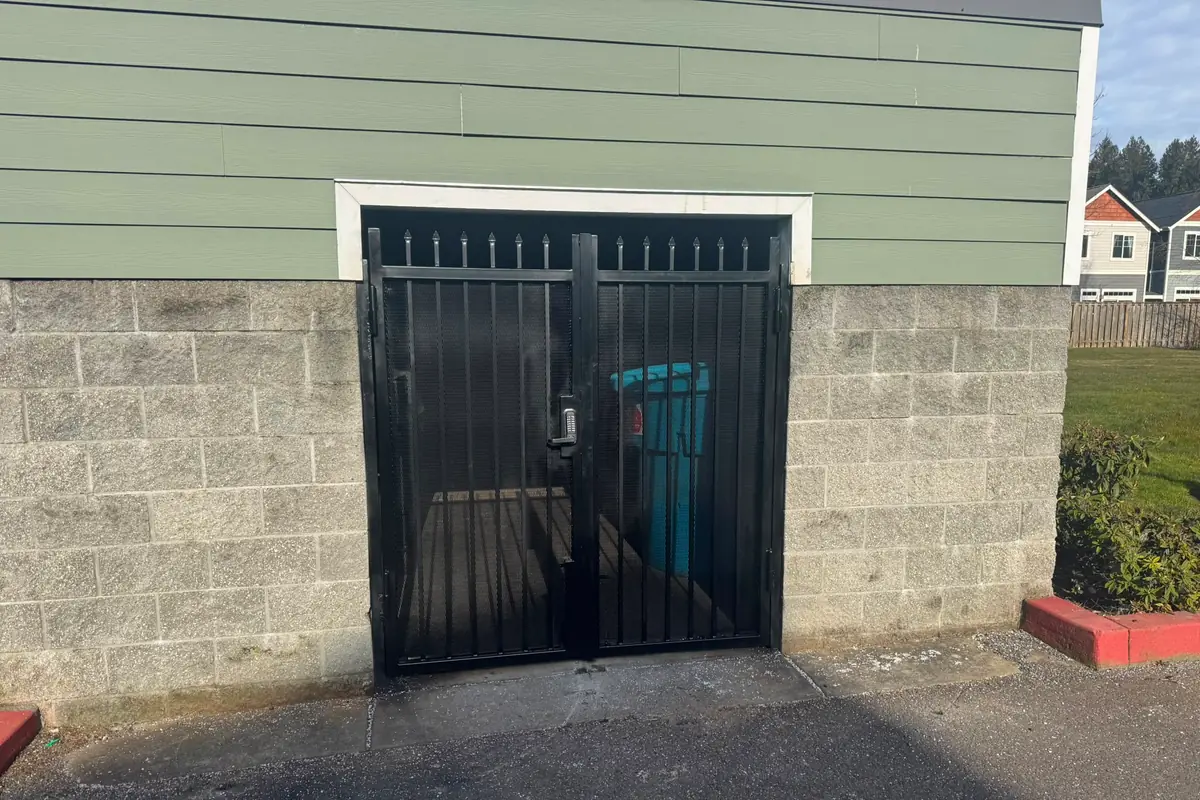
- Gate slows, stalls, or reverses during peak hours
- Operator hums or clicks but the gate no longer moves
- Barrier arm bounces, parks crooked, or stays up after vehicles clear
- Keypad or telephone entry works only intermittently
- Gate found standing open overnight, or stuck closed at shift change
- Grinding, chain slap, or squealing audible across the lot
- Gate works after a rest, then fails once traffic resumes
The Engineering Behind the Failure
Duty Ratings: Why Commercial Gates Wear Out Faster Than They Should
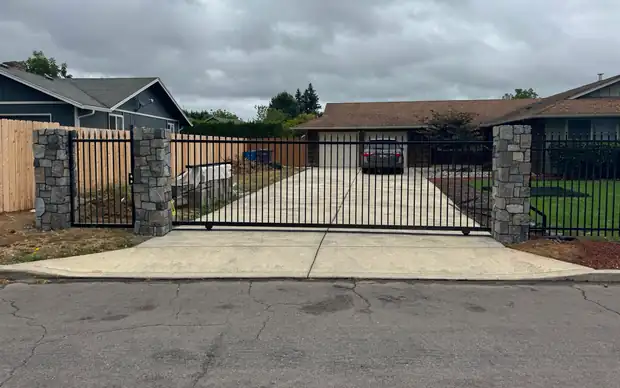
Every gate operator carries a duty cycle rating: the number of open-close cycles per hour it can sustain without overheating.
This one specification explains most premature failures at multi-family and industrial properties. A residential-grade operator at a 150-unit complex is not defective; it is doing a job it was never sized for, so the motor runs hot, the gear reduction wears early, and the control board ages in fast-forward. Our first question on any commercial call is whether the machine matches the traffic.
Count the Cycles
We estimate real daily traffic (units, vehicles, delivery trips) against the installed operator's continuous-duty capability. Many boards log cycle counts, which turns the estimate into a measurement.
Find the Failed Component
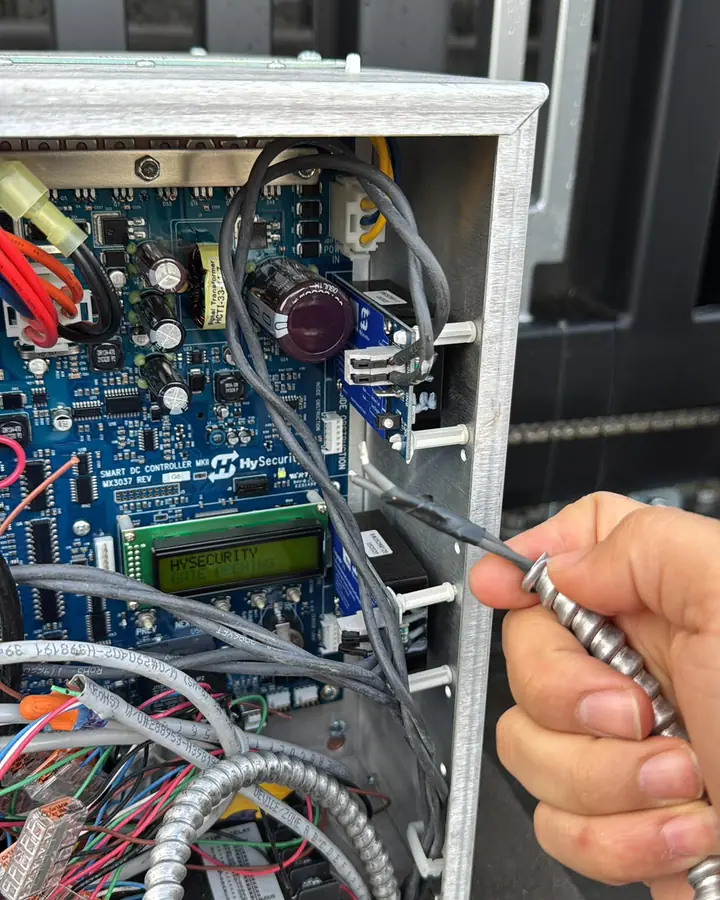
From there the diagnosis follows the same discipline as any gate opener and motor repair: verify power, test the control board, check limit switches, inspect the gear kit or hydraulic drive, and measure motor draw under load.
Repair What Failed, Flag What's Wearing
We replace the failed part on site whenever stock allows, then document anything worn but still serving (a stretching chain, a pitting roller, a tired contactor) so your facilities team can plan instead of react.
Verify the Safety Devices
Commercial gates move heavy steel through spaces shared with pedestrians. Before we leave, we test photo eyes, safety edges, and entrapment protection against UL 325 expectations, because a gate that closes on a car in an apartment lane is a liability no property wants.
Equipment We Service
Slide Gates, Swing Gates, and Barrier Arms: the Whole Entrance
A commercial entrance is a system: the operator, the barrier arm, and the detection equipment that tells them when to move. We repair all three, and the sections below explain how each fails.
High-Cycle Slide & Swing Operators
We service commercial-duty operators from LiftMaster, DoorKing, Viking, FAAC, BFT, Nice, Apollo, Elite, and Eagle, repairing control boards, contactors, gear kits, clutches, and limit assemblies. Heavy cantilever and V-track gates get the drive-line attention we describe under sliding gate repair, scaled up for the extra weight.
Barrier Arms
Parking structures and truck yards often run barrier arms instead of a full gate. We replace snapped and delaminated arms, rebalance springs, reset limits so the arm parks level, and trace the loop faults that leave an arm stuck upright while the lot sits open.
Access Control & Detection
Telephone entry panels, keypads, fob readers, cellular intercoms, and exit loops feed the operator its instructions. When credentials work at noon but not at midnight, the fault is usually in this layer. See our keypad, intercom, and access control repair service.
Local Conditions
What Eight Months of Drizzle Does to a Commercial Entrance
The Pacific Northwest is gentle on very little that lives outdoors, and commercial gates are no exception.
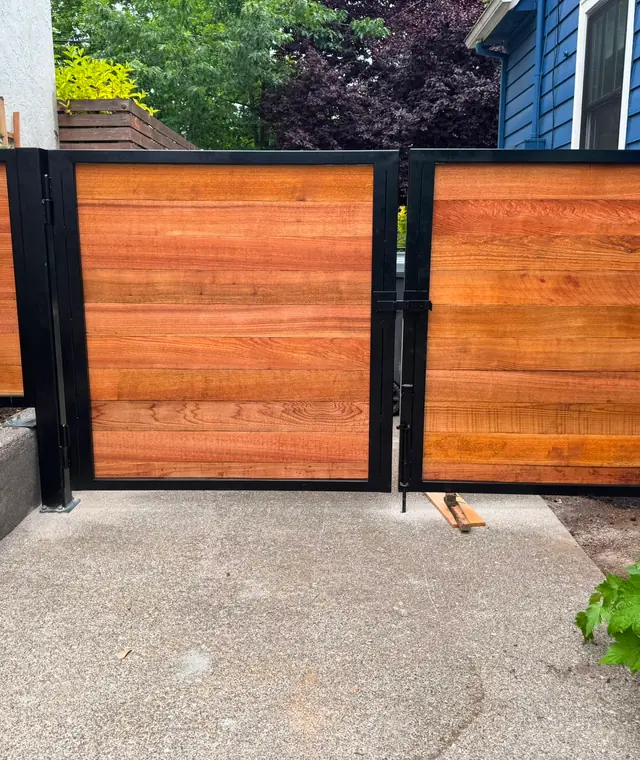
Standing water corrodes loop detector splices, which is why so many barrier arms in Portland parking structures start ghost-cycling in November. Fir needles pack into slide gate tracks each fall, and a 900-pound commercial gate grinding over that debris loads the operator far harder than any residential gate. Winter outages hit both sides of the river; the surge when power returns kills control boards, and a complex in Vancouver with a dead board is a complex with a line of cars at the entrance.
Rust deserves its own mention. Wet air finds every chipped weld and unpainted drill hole, and on a heavy frame a rusted-through bottom rail becomes structural before it becomes cosmetic. Our on-site welding and rust repair work handles cracked welds and rail reinforcement without hauling the gate away.
Downtime & Prevention
The Cheapest Repair Is the One You Scheduled
Gate downtime at a commercial property is never just the repair invoice.
It is a leasing office fielding calls, a security policy suspended while the entrance stands open, trucks rerouted around a yard gate that will not move. That arithmetic is why we recommend recurring service agreements: scheduled visits tuned to your cycle counts, covering lubrication, force and limit adjustment, safety device testing, drive inspection, and a written condition report. The seasonal logic behind our gate maintenance plans applies here, scaled to commercial traffic.
When something fails anyway, our 24/7 emergency gate repair dispatch covers stuck-closed entrances, stuck-open security exposures, and vehicle impact damage at any hour. We will also tell you plainly when an operator is past saving: we show you the failed component, explain the sizing a high-cycle entrance actually needs, and let the cycle counts make the argument.
Manager Questions
Commercial Gate Repair FAQ
What does a duty cycle rating mean, and why does it matter for my property?
A duty cycle rating is how many open-close cycles per hour an operator can sustain without overheating. A residential operator might be built for a handful of cycles a day, while a 200-unit apartment entrance can see that many before breakfast. A light-duty operator on a high-traffic gate runs hot, trips its thermal overload, and wears out its motor, gears, and board early. Matching the rating to real traffic is the single most important spec on a commercial gate.
Do you repair barrier arms as well as full gates?
Yes. Barrier arm operators share most of their anatomy with gate operators: a control board, a motor, a gear reduction, limit switches, and loop detector inputs. We repair snapped and delaminated arms, replace failed balance springs, recalibrate limits so the arm parks level, and diagnose loop and sensor faults that leave the arm stuck up or cycling on its own.
Our HOA gate only fails during the morning and evening rush. Why?
Failures that follow traffic patterns usually point to heat or to detection. An operator near the edge of its duty rating overheats during peak-hour clustering and trips its thermal protection, then works again once it cools, which is why the problem seems to vanish by the time anyone looks at it. Alternatively, a marginal loop detector or photo eye misreads closely spaced vehicles. We diagnose by measuring cycle counts and motor temperature rather than guessing.
Do you offer recurring service agreements for commercial properties?
Yes. We set up scheduled service visits matched to your traffic level and equipment, typically covering lubrication, limit and force adjustment, safety device testing to UL 325 expectations, drive inspection, and a written condition report your board or facilities team can file. The goal is to catch a wearing gear kit or corroded connection during a planned visit instead of during Monday morning move-in traffic.
What happens if our gate fails outside business hours?
We run 24/7 emergency dispatch. For a gate stuck closed and blocking residents or trucks, we can usually walk your on-site staff through the manual release by phone so traffic moves while a technician is en route. A gate stuck open is a security decision: we prioritize getting it secured the same visit, even if a full repair requires a returned part.
A Gate Down Is a Property Problem. We Treat It Like One.
Commercial diagnosis, high-cycle repairs, and service agreements for HOAs, apartments, and yards in Portland and Vancouver.