
Repair-First • Both Sides of the River
Swing Gate Repair
A swing gate carries its whole weight on two or three hinge points, and everything else is built around that geometry. When the geometry drifts, the symptoms follow. We find the part that moved, and we fix that.
- Hinges, posts & actuator arms
- Single & dual-leaf gates
- Portland OR & Vancouver WA
The Early Warnings
Symptoms a Swing Gate Shows Before It Stops
Swing gates rarely fail without warning. Each symptom below points at a specific part of the system, and catching the pattern early usually means a smaller repair.
- The latch side of the leaf has dropped out of line with the receiver or ground stop.
- The gate scrapes the driveway at the end of its swing after weeks of rain.
- Dual leaves close with a gap or overlap where they used to meet cleanly.
- The hinges groan or knock, and you can lift the closed leaf and feel play in the barrels.
- The gate post leans, or the concrete around it has cracked and tilted.
- The actuator arm hums, clicks, or runs without moving the gate.
- The gate opens partway, then reverses on an obstruction that is not there.
- One leaf of a pair moves normally while the other hesitates or stalls.
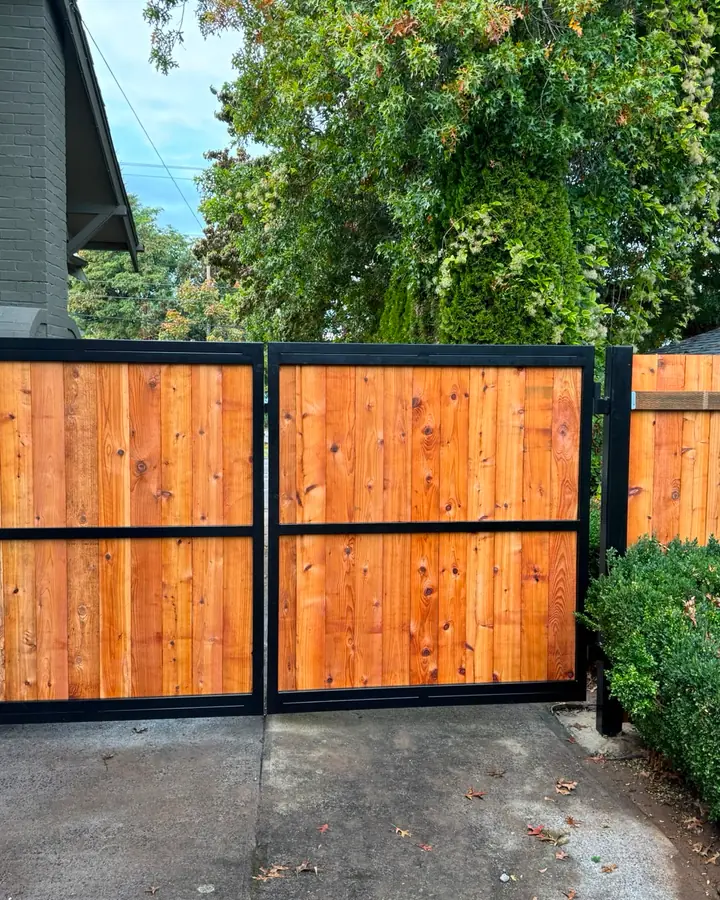
What Actually Fails
The Four Failure Points of a Swing Gate
Nearly every swing gate failure traces back to one of four places: the hinges, the posts, the actuator arms, or the synchronization between two leaves. Each is explained below.
Hinges and hinge barrels
Every cycle of the gate turns a steel pin inside a steel barrel. Without grease, that friction slowly machines the bore into an oval, the leaf tips forward under its own weight, and the sag begins. We replace worn weld-on barrels, upgrade to sealed bearing hinges where the gate weight justifies it, and re-weld hinge points that have cracked at the post. Cracked hinge welds are structural, not cosmetic. Our mobile gate welding and rust repair service handles them on site.
Posts in wet clay soil
The soils on both sides of the Columbia carry a lot of clay, and clay is expansive: it swells through eight months of drizzle and shrinks back in the dry season. That cycle works a shallow or undersized footing back and forth until the post leans, and a lean of two degrees at the post becomes inches of drop at the latch. Wood posts add a second failure mode: rot at the grade line, where moisture sits. When a post has failed, we excavate it, set a new steel post in a footing sized for the leaf, and re-hang your existing gate. If the frame itself cannot be re-hung, we will show you why and discuss new gate installation as an engineering judgment, not a sales pitch.
Linear actuator arms
Most residential swing gates are driven by a linear actuator: a motor spinning a screw that pushes and pulls the leaf. The common failures are worn drive nuts, seized screws, failed limit switches, and motors weakened by stalling against a binding gate. An arm that failed because the gate binds will fail again if only the arm is replaced, so we always check the swing by hand first. When the fault is electrical (a dead control board, a failed capacitor, a deaf receiver), the work falls under gate opener and motor repair, and the diagnosis tells us which side of that line you are on.
Dual-leaf synchronization
A pair of leaves has to move in sequence: the leaf with the overlapping edge closes last, and the control board manages that delay. Power outages, board replacements, and limit drift can scramble the sequencing, so leaves collide, close in the wrong order, or leave a gap at the center. Re-synchronizing means confirming both posts and hinge sets are sound, then re-learning travel limits and leaf delay at the board. After any limit change we verify the photo eyes and safety edges still function to the UL 325 standard, because a gate that no longer reverses on obstruction is not a finished repair.
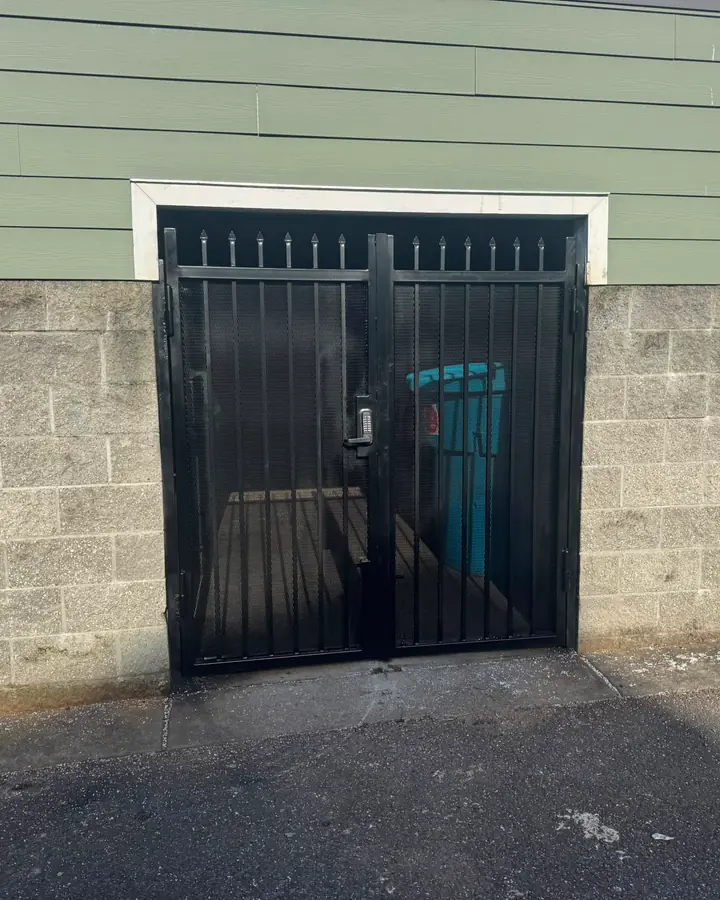
What the Truck Carries
Swing Hardware and the Operators Behind It
We service the swing gate operators most common in this market, including LiftMaster, DoorKing, Nice, Apollo, Viking, FAAC, BFT, US Automatic, Mighty Mule, GTO, Linear, Eagle, and Elite. The trucks carry weld-on hinge barrels in the common sizes, sealed bearing hinges, gate wheels for long leaves, drop rods, and receiver hardware, so a first visit is very often the only visit.
Solar-charged operators are popular on rural acreage from Battle Ground north: a battery that spent a gray winter undercharging moves the gate slower and slower before it quits, and the fix is often the battery and panel, not the operator.
- Hinge barrels, bearing hinges & hinge re-welds
- Linear actuator arms, drive nuts & limit switches
- Control boards, capacitors, receivers & remotes
- Post excavation, new footings & re-hanging
- Photo eyes, safety edges & UL 325 checks
- Batteries & panels for solar operators
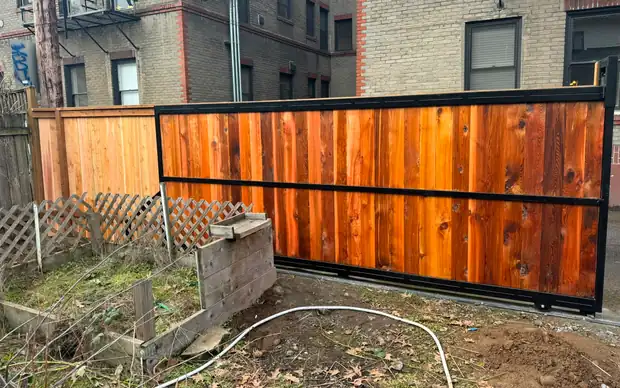
The Local Factor
Why Swing Gates Drag in a Northwest Winter
A swing gate that clears the driveway all summer and drags by January has not shrunk your driveway; something in the system moved.
Saturated clay lets marginal footings lean, and wood infill soaks up water and adds real weight to the leaf, accelerating hinge wear exactly when the hinges are coldest. On the steep, narrow driveways of Portland's West Hills we also see leaves hung with minimal ground clearance to follow a slope, where a small winter sag puts steel on pavement. Our Portland gate repair crew measures the swing across the full arc before adjusting anything.
North of the river, around Vancouver, Felida, and Salmon Creek, larger lots mean longer leaves, more load on each hinge, and more travel on each actuator, so wear shows up earlier in the season. A fall and spring visit (grease in the barrels, limits verified, battery load-tested) catches most of this before it becomes a stuck gate, which is the reasoning behind our gate maintenance plans. When a leaf jams with a car on the wrong side, that is what our 24/7 emergency gate repair dispatch exists for.
Frequently Asked
Swing Gate Repair Questions, Answered
Why does my swing gate sag on one side?
A gate leaf is a cantilever: all of its weight hangs from two or three hinge points on one post. Over years of cycling, the pin inside each hinge barrel wears the bore into an oval, the leaf tips forward, and the latch side drops. The fix is usually new hinge barrels or bearing hinges, re-welded plumb, followed by re-setting the operator limits. If the post itself has moved, the post gets corrected first.
Can a leaning or rotted gate post be fixed without replacing the whole gate?
Usually, yes. If the leaf and frame are sound, we excavate the failed post, set a new steel post in a properly sized concrete footing, and re-hang the existing gate on new hinges. The gate itself is often the healthiest part of the system. Replacement of the whole assembly only makes sense when the frame is rusted through or racked beyond straightening.
My dual swing gates no longer meet in the middle. What causes that?
A center gap almost always comes from one of three places: a hinge or post has shifted on one side, one actuator's travel limits have drifted, or the control board's leaf-delay sequencing has been lost after a power event. We measure both leaves against the posts first, because adjusting limits to hide a mechanical problem only wears the operator faster.
Why does my gate drag on the ground only in winter?
Two seasonal effects stack up here. The clay-heavy soils around Portland and Vancouver swell when saturated, which lets a marginal footing lean a few degrees, and wood gates absorb water and gain real weight through the wet months. A leaf that cleared the driveway in August can drag by January. The repair addresses the cause (the post, the hinges, or both) rather than trimming the gate.
My actuator arm hums without moving the gate. What has worn out?
A hum with no motion usually means the motor is getting power but cannot turn the drive: a stripped drive nut inside the arm, a seized gearbox, or a failed starting capacitor are the common culprits. It can also mean the gate is binding and the operator is stalling against it. We test the arm off the gate to separate an operator failure from a hardware failure before replacing anything.
Sagging, Dragging, or Stuck Mid-Swing?
We diagnose the hinge, the post, or the arm, then repair the one that actually failed. Serving both sides of the river.