
Sliding Gate Repair
A sliding gate rides on a short list of wear parts: rollers, track, chain or rack, and the gearbox that drives them. When one starts to fail, the gate tells you long before it stops: it grinds, it hesitates, it drifts off line. We read those symptoms, find the part that failed, and fix it.
- V-track & cantilever
- Chain & rack-and-pinion
- Portland & Vancouver
Symptoms of a Failing Sliding Gate
None of these symptoms means the gate is finished. Each one points to a specific component, and the earlier it is caught, the smaller the repair.
- The gate grinds, squeals, or chatters as it travels the track
- It stops partway and reverses with nothing in the way
- One end of the gate has dropped, or the gate drags on the pavement
- The chain sags, slaps against the gate, or has jumped its sprocket
- The motor runs but the gate creeps, stalls, or will not move at all
- The gate coasts past its stopping point or bangs into the end stop
- The gate has come off its track or its guide rollers entirely
A motor that runs while the gate barely moves is usually a hardware problem, not a motor problem. If the operator is silent or clicking, the diagnosis moves upstream to the control board and drive train. See our gate opener and motor repair service.
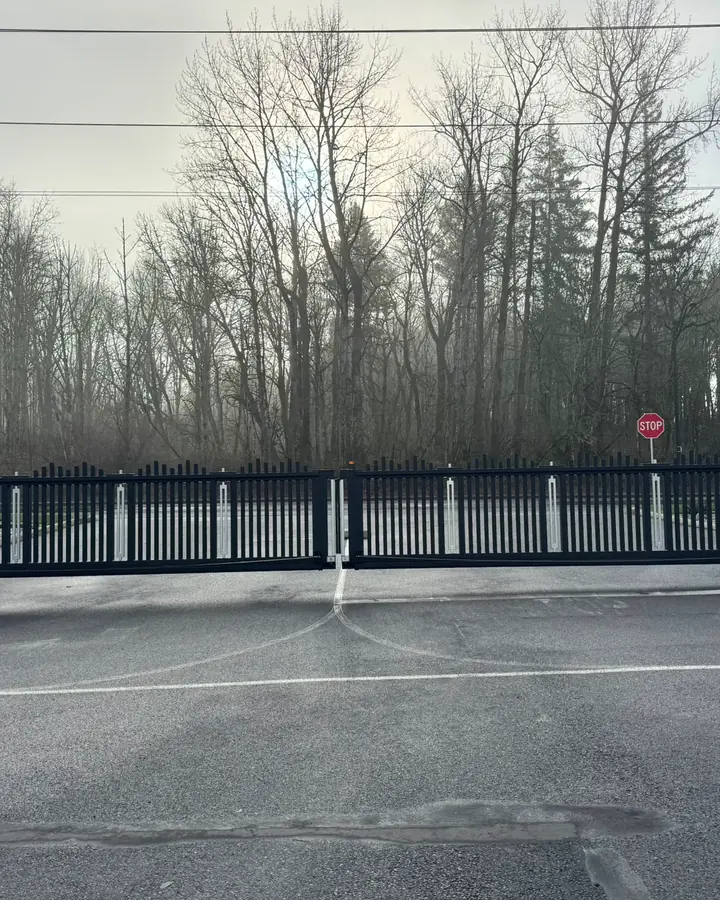
Rollers, Trucks, and the Track They Live On
Rollers are the most common failure on any sliding gate. They carry the full weight of the gate through every cycle, and in this climate they do it wet for most of the year.
Bearings rust, seize, and the wheel stops turning; from that point the roller skids along the track and wears a flat spot you can hear as a grind. We replace worn rollers with sealed-bearing wheels matched to the track profile, because an open bearing in a wet winter is a slower version of the same failure.
The distinction that shapes the whole repair is how your gate is carried. A V-track gate rolls on V-grooved wheels over a steel track set at ground level, simple, strong, and cheap to maintain, but exposed to everything that falls on your driveway. A cantilever gate never touches the ground: it hangs from truck assemblies on posts and counterbalances itself past the opening. When cantilever truck bearings wear, the gate develops a sway and a rumble that only gets worse.
Chain Drive Versus Rack-and-Pinion
Most residential slide gates around Portland are chain driven: the operator turns a sprocket that pulls a chain anchored to each end of the gate.
Chains stretch with use, and a stretched chain sags, slaps, and eventually jumps the sprocket. Often the fix is adjusting the tensioners and lubricating the chain; when the stretch is past adjustment, we replace the chain and check the sprocket for hook wear, since a worn sprocket will quickly ruin a new chain.
Rack-and-pinion drives, common on newer and higher-cycle gates, mesh a gear on the operator with a toothed rack bolted along the gate. There is no tension to maintain, but alignment is everything: a gate that has dropped even slightly lets the pinion ride out of mesh and strip teeth. We correct the gate height first, then address the rack. Replacing the rack on a leaning gate treats the effect and leaves the cause.
Leaning Gates and End Stops
A sliding gate that leans is announcing a foundation problem. Sometimes the cause is a collapsed roller on one end; sometimes a support post has moved in soil that spends eight months of the year saturated.
We plumb the posts and correct the cause: new hardware, a reset post, or reinforcement. If the frame itself has cracked at a weld or rusted through where water sits inside the rail, our mobile welding and rust repair work handles that on site.
End stops are the physical limit that keeps the gate from sliding off the open end of its track, backing up the operator's electronic limits. A missing or bent end stop plus a drifted limit switch is how a gate ends up on the ground, a recovery we handle under off-track and roller repair. We verify both on every sliding gate visit.
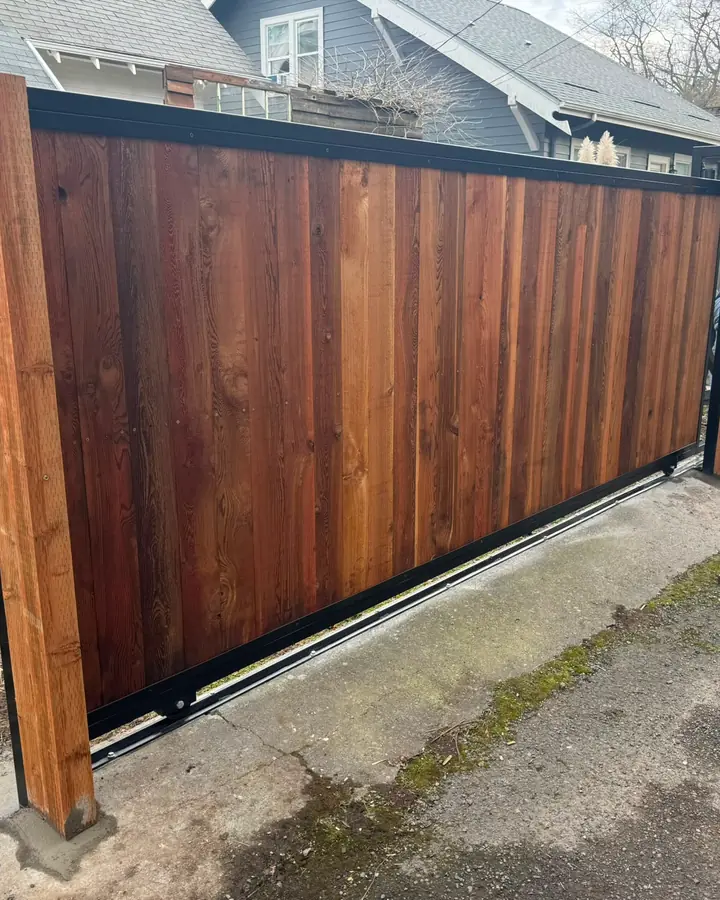
Fir Needles in the Track, Every Fall
Sliding gates in this region have a seasonal enemy. Every autumn, fir and cedar needles drop into ground-level tracks, the rain packs them down, and the rollers grind them into a dense mat.
The gate keeps working, harder each week, until by January the operator is straining against a track it can no longer read, and the obstruction sensing starts reversing the gate on nothing. The same pattern shows up on tree-lined driveways from the West Hills to the acreage north of Vancouver.
The repair is straightforward: clear and dress the track, free or replace the affected rollers, and reset the operator's force and limits. Preventing the repeat is even simpler. A fall track-clearing visit is a core item in our seasonal maintenance plans, and for wooded sites it pays for itself in avoided roller replacements alone.
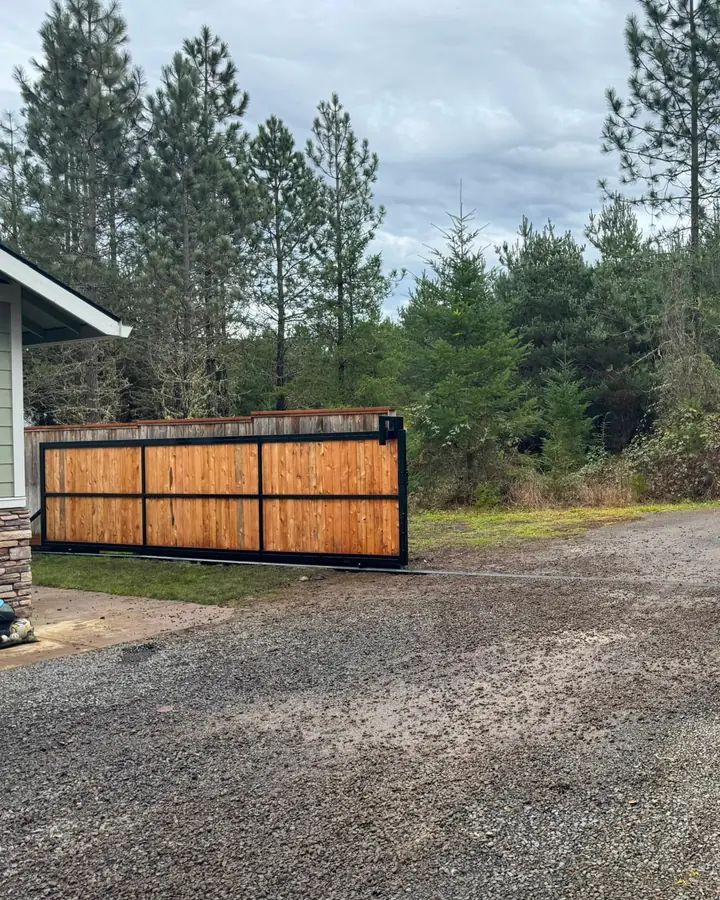
Hardware and Operators We Service
Sliding gate hardware is mostly standardized: our trucks carry V-groove rollers in the common diameters, sealed cantilever trucks, chain with matching tensioners, rack sections, guide rollers, and end stops. Most sliding gate repairs finish in one visit because the wear parts are already on board.
On the operator side we service the slide-gate lines from LiftMaster, DoorKing, Nice, Apollo, Viking, FAAC, BFT, US Automatic, Eagle, Elite, GTO, and Linear, including limit switches, drive sprockets, and the gear kits that wear out long before the motor does. Where the gate protects a shared entrance, an apartment drive, or a truck yard, the same diagnostic work scales up; our commercial gate repair page covers high-cycle operators and service agreements.
Sliding Gate Repair Questions
Why does my sliding gate grind or squeal when it moves?
Grinding usually means the rollers have worn flat spots or their bearings have seized, so the wheel is skidding along the track instead of turning. Squealing tends to be a dry bearing that still spins. Either way the noise is the early warning: a skidding roller chews the track, and a chewed track then destroys every new roller you put on it. Replacing rollers while the track is still smooth is a far smaller repair than replacing both.
My gate stops partway and reverses. What causes that?
The operator is sensing more resistance than it expects and treating it as an obstruction. On sliding gates the usual culprits are debris packed in the track, a dragging roller, a sagging chain, or a gate that has started to lean and bind. Occasionally the force setting or an inherent-sensing board is at fault instead, which is an operator-side diagnosis rather than a hardware one.
Is a V-track or a cantilever gate better for the Portland and Vancouver climate?
A V-track gate rolls on a ground-level track, so it collects fir needles, leaves, and grit through our long wet season and needs regular clearing. A cantilever gate hangs from rollers and never touches the ground, so debris cannot stop it, but it needs more run-off room to one side and heavier support posts. Neither is wrong here; the right choice depends on the site, and an existing gate of either type can almost always be repaired rather than converted.
Can a leaning sliding gate be straightened, or does it have to be rebuilt?
Most leaning gates can be corrected. If the cause is worn rollers or shifted guide wheels, new hardware and realignment restore it. If a support post has moved in wet soil, the post can be reset or reinforced. Rebuilding only enters the conversation when the gate frame itself has cracked welds or rusted-through rails, and in many of those cases on-site welding still saves the gate.
How often should a sliding gate track be cleaned in the Pacific Northwest?
For a V-track gate under or near conifers, we recommend clearing the track every fall after the needles drop and checking it again after winter storms. Gates in open sites can go longer. A seasonal maintenance visit that cleans the track, checks roller bearings, and sets chain tension prevents most of the sliding gate failures we are called out for.
Gate Grinding in the Track? Catch It While the Repair Is Small.
A failing roller costs a little today and a new track later. We diagnose sliding gates on both sides of the river: Portland and Vancouver.