
Off-Track & Roller Repair
A sliding gate rarely jumps its track without warning. Rollers flatten, bearings seize, a rail creeps out of line, and one morning the gate is resting on the concrete instead of its wheels. We find what actually moved, put the gate back where it belongs, and correct the wear that let it happen.
- Licensed in OR & WA
- Stocked repair trucks
- Same-day in most cases
Signs a Gate Is Off Its Track, or About to Be
By the time a gate derails, it has usually been leaving evidence for months. Caught early, the repair is a set of rollers and an alignment, not a rebuild.
- The gate drags or has worn a groove in the driveway at one end of its travel
- A visible gap between a wheel and the track, or a wheel riding up on its flange
- A grinding or rhythmic clunk each time a roller passes the same spot
- The gate moves a few feet, stalls, and the operator reverses or shuts down
- Track joints that no longer line up, or anchor bolts working loose
- Rust powder or metal shavings collecting beneath the rollers
- The gate was struck by a vehicle and no longer sits square in the opening
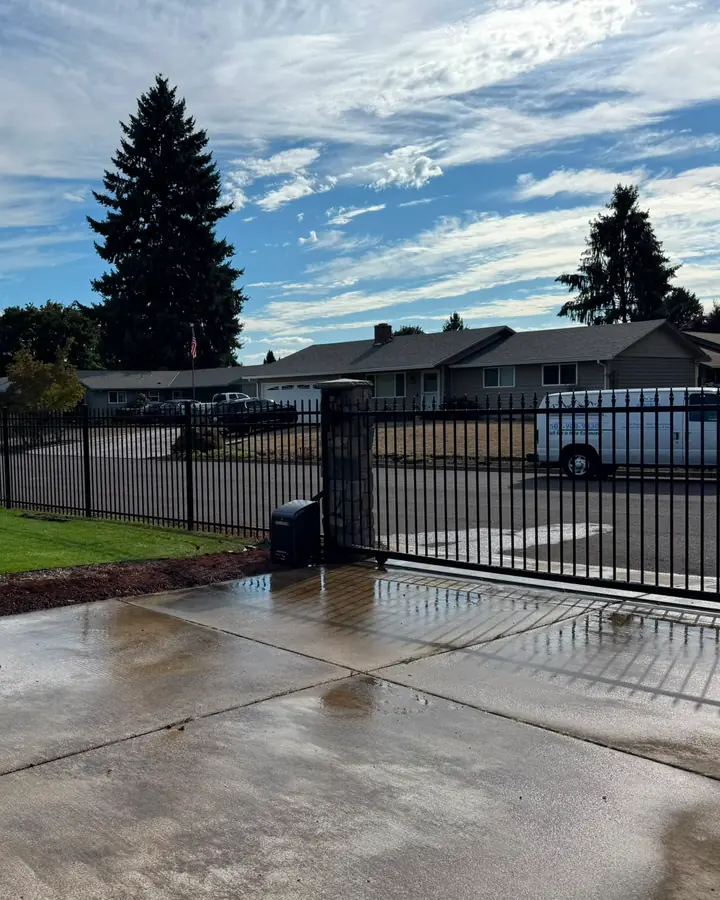
Why Sliding Gates Come Off the Track
A derailment means one half of the track-and-roller system stopped holding up its end. Nearly every call traces to four causes: rollers that wore flat or seized, a track that moved, debris the wheels could not climb, or a vehicle impact. Off-track work is the sharp end of sliding gate repair: the wear that derails a gate first announces itself as noise and hesitation.
A V-groove wheel is meant to spin freely and stay keyed into the vee of the rail. A seized bearing makes it skid instead of roll, grinding a flat spot that no longer centers; the next stone, stick, or ridge of ice lifts it out.
Track moves on its own. The clay-heavy ground under this metro swells through the wet season and shrinks back in late summer, and a rail anchored to concrete over that clay migrates with it: bolts loosen, joints step out of line, and a run that was level in July sits a quarter inch proud by February.
The Northwest adds its own load. Douglas fir needles collect in the vee every fall and get ground into paste, moss takes hold wherever the sun does not reach, and in a cold snap standing water freezes into a ramp the wheel climbs. A track cleared each fall and spring, the core of our gate maintenance plans, prevents most of it.
Impacts are the bluntest cause. A bumper tap at parking speed can shove a gate off its wheels without bending anything visible; a harder hit folds the track or racks the frame. If a derailed gate is blocking your driveway, our 24/7 emergency gate repair line is answered around the clock.
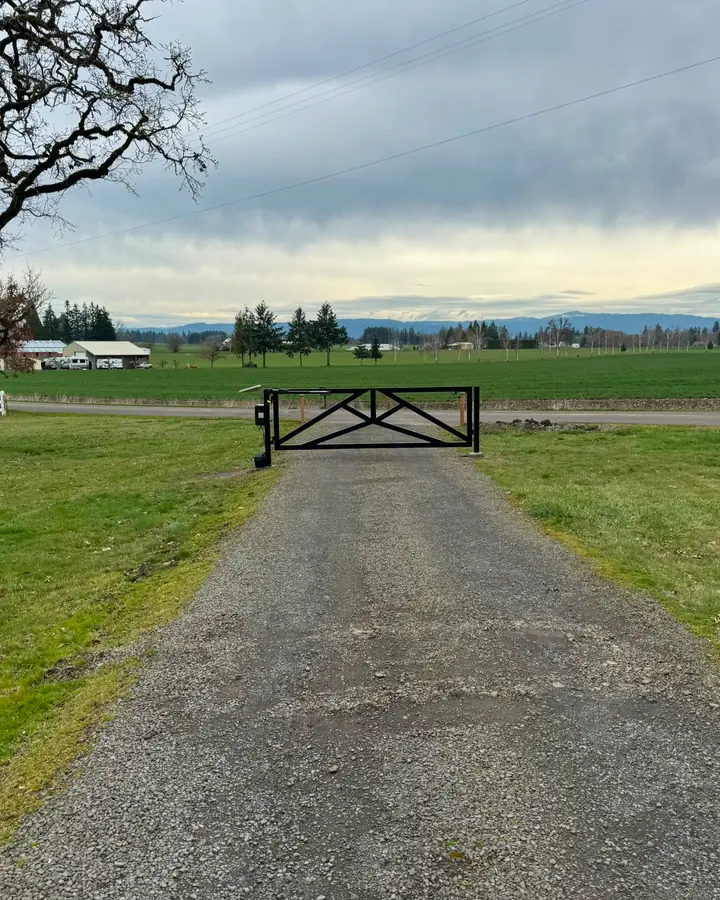
How We Put a Derailed Gate Back, and Keep It There
Putting a derailed gate back on its track is the easy part. Keeping it there means correcting the track, replacing the wear parts that let it derail, and re-tuning the operator. The four steps are below.
Secure and Diagnose
We disengage the operator, support the gate, and walk the full travel: track level and straightness, anchor condition, every roller spun by hand. Re-hanging a gate without fixing what derailed it schedules the next failure.
Correct the Track
Loose anchors are re-set, low sections shimmed level, and a bent length of rail straightened or cut out and replaced. On cantilever systems the equivalent work happens at the support posts and carriage alignment.
Replace the Wear Parts
Flat-spotted or seized wheels come off and sealed-bearing replacements go on, along with guide rollers and the end stops many gates are missing; without stops, a gate can roll off the open end of its own track. Cracked roller mounts get corrected with on-site welding and reinforcement before the gate goes back up.
Re-Hang and Re-Tune
Back on its wheels, the gate travels a slightly changed path, so the operator is brought into agreement with it: limits re-set, chain tension corrected, obstruction sensing re-tested. The electrical side is covered on our gate opener and motor repair page; we handle both halves in one visit.
Re-Hang or Rebuild: The Honest Criteria
Not every derailed gate should go straight back on its wheels, and we would rather say so at the first visit. The frame decides; this is roughly how we call it.
| What we find | The call we make |
|---|---|
| Frame straight, rollers worn, track intact | Re-hang, usually the same visit: new rollers, alignment, operator re-tune |
| A bent or lifted track section, frame undamaged | Repair or replace that length of rail, then re-hang on fresh rollers |
| Cracked welds at roller mounts or the bottom rail | Weld and reinforce on site before the gate carries weight again |
| Frame twisted out of plane; the gate no longer sits flat | Straightening rarely holds: rebuild the panel or replace the leaf |
| Bottom rail rusted through where the wheels mount | A new rail welded in if the frame is sound; replacement if not |
When the arithmetic favors replacement, we will show you the failed metal and say so. Our approach to new gate installation starts from the same repair-first premise. On most driveways the frame is fine and the fix is a short list of parts.
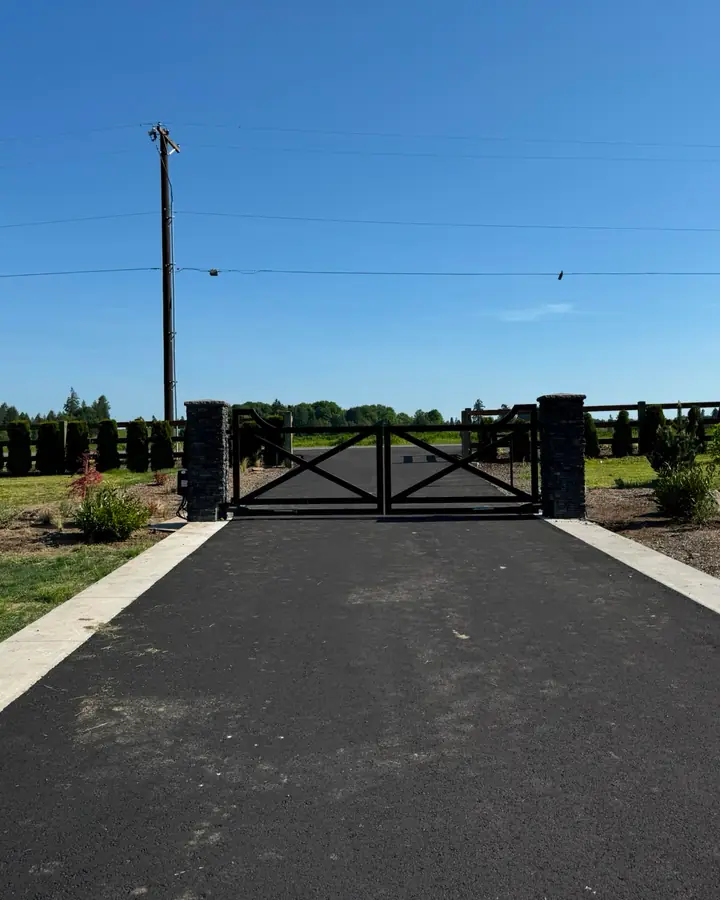
The Rollers, Trucks, and Track We Carry
Our trucks stock V-groove steel wheels in the common diameters and bores, sealed-bearing upgrades for open-bearing originals, cantilever carriage trucks, nylon and UHMW guide rollers, galvanized track, and replacement end stops. Running gear is largely independent of the operator brand, so it does not matter whether a LiftMaster, DoorKing, Viking, Nice, Apollo, Eagle, Elite, or US Automatic unit drives your gate. We service the hardware underneath all of them.
The same failure wears a different face across the metro. On the steep, close-set driveways of Portland's west side, a derailed gate often has nowhere to be pushed clear, so the repair happens where the gate stands. On the large parcels around Battle Ground and north Vancouver, gates run heavier and track runs longer, so a small alignment error at one end multiplies by the other. We cross the Interstate Bridge daily; both patterns are routine work.
Off-Track Repair Questions
Can I keep using a gate that has come off its track?
We advise against it. A derailed gate is carrying its weight on parts that were never meant to bear it: guide rollers, the operator chain, sometimes the fence itself. Every cycle bends something else, and a gate that starts as a straightforward re-hang can become a frame repair within a week. Disengage the operator with the manual release, secure the gate, and leave it parked until it has been inspected.
What does an off-track repair usually involve?
Most calls come down to three tasks: correcting whatever moved the track or the gate out of alignment, replacing the rollers or carriage trucks that wore out along the way, and re-tuning the operator so its limits and chain tension match the gate's corrected travel. If the frame itself is bent or a roller mount has cracked, we add on-site welding to that list.
How long do gate rollers last in the Portland and Vancouver climate?
It depends on the bearing and the housekeeping. Open-bearing steel wheels running in a track full of fir needles and grit can wear out in a few years, while sealed-bearing rollers on a track that gets cleared each fall routinely last far longer. The wet season here is harder on rollers than the mileage is, which is why we default to sealed bearings on every replacement.
My gate was hit by a car. Can it be repaired?
Often, yes. The deciding factor is the frame. If the main rails are straight and the damage is limited to track, rollers, pickets, or hardware, the gate can usually be re-hung and reinforced. If the frame is twisted so the gate no longer sits flat, straightening rarely holds, and we will tell you plainly that rebuilding the panel or replacing the leaf is the sounder investment.
Do cantilever gates go off track too?
A cantilever gate has no ground track (it rides on enclosed carriage trucks mounted to posts), so it cannot derail the way a V-track gate can. What it does instead is wear or seize those trucks, which shows up as sagging at the nose, binding mid-travel, and a groan under load. We rebuild and replace cantilever trucks as part of this same service.
Gate Off Its Track? Park It and Call.
Every forced cycle on a derailed gate bends something new. We'll talk you through securing it, then come put it right. Both sides of the river.