
Gate Maintenance Plans
Most of the gate failures we repair in January started as small problems in October. A maintenance plan is scheduled diagnosis: we find the worn roller, the stretched chain, and the corroding terminal while they are still adjustments rather than breakdowns.
- Fall & Spring Tune-Ups
- Written Condition Reports
- Licensed in OR & WA
Signs Your Gate Is Overdue for Service
A gate rarely announces that it is about to fail. It gives quieter signals first, and most are easy to dismiss for months.
- The gate opens noticeably slower than a year ago, or hesitates before it moves.
- Grinding from the track, or squealing from hinge barrels that lubrication used to silence.
- The gate stops partway and reverses with nothing blocking it.
- The drive chain sags, slaps, or rattles when the gate changes direction.
- The keypad or remote works on the second or third press instead of the first.
- Rust blooming at welds, hinge plates, or along the bottom rail.
- The gate no longer sits level, and the latch has drifted out of alignment.
Each symptom has a mechanical cause, and every cause is cheaper to correct the earlier it is found. That is the whole argument for a maintenance plan.
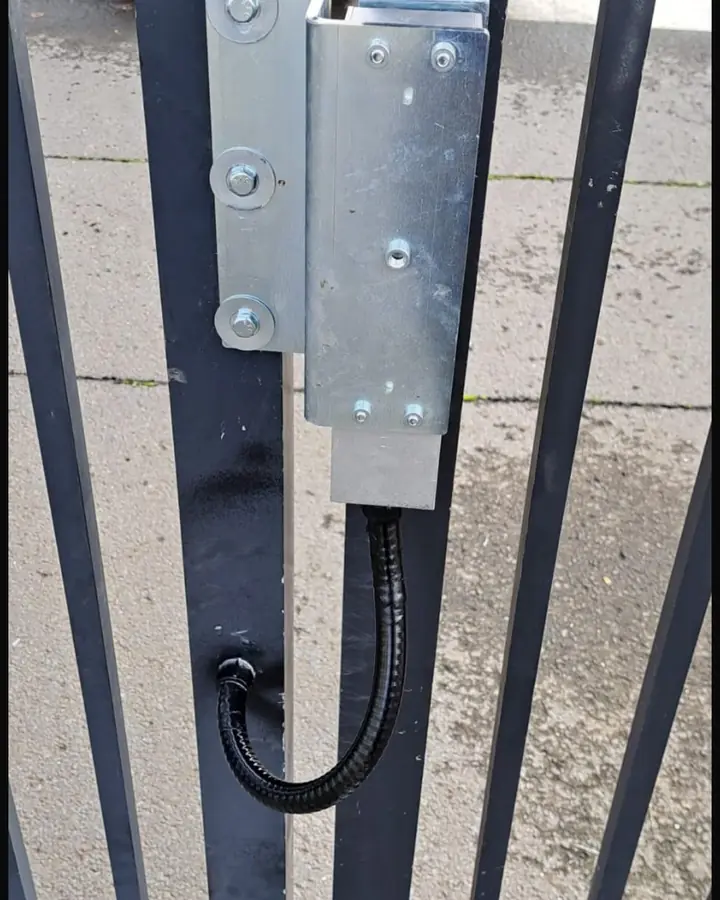
What a Tune-Up Includes, Item by Item
A maintenance visit is the same diagnostic sequence we run on a gate opener repair call, performed before anything has failed. We work through the operator, the hardware, and the safety devices in a fixed order.
Drive, Power & Electronics
- Measure the operator's current draw under load. A motor pulling above its rating is the earliest measurable sign of binding hardware.
- Inspect the control board for moisture tracking, corrosion, and insect nests, all routine finds in this climate.
- Verify limit switch settings so travel ends exactly where it is supposed to.
- Test the battery backup under a simulated outage and confirm the surge protection is intact.
- Test remotes, receivers, and keypads and intercoms, cleaning corroded contacts.
- Confirm loop detectors and exit sensors trip at the correct sensitivity.
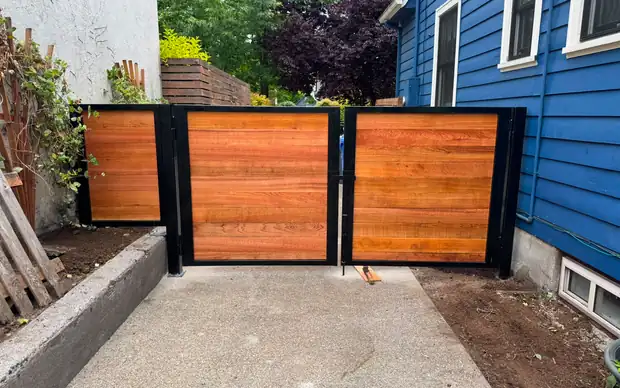
Hardware, Structure & Safety
- Clear the track of fir needles, leaves, and moss, then check each roller for flat spots and bearing play.
- Set chain tension or rack-and-pinion mesh to specification; both drift as steel expands and contracts.
- Lubricate hinge barrels, bearings, and the drive: grease where grease belongs, dry film where grit collects.
- Check posts for plumb and leaves for level, because saturated clay soil moves footings over the winter.
- Inspect welds and the bottom rail for rust, and flag anything needing welding or rust repair before it spreads.
- Test photo eyes, safety edges, and auto-reverse against UL 325 expectations: mounted and working, not bypassed.
We maintain operators from LiftMaster, DoorKing, Nice, Apollo, Viking, FAAC, BFT, US Automatic, Mighty Mule, Eagle, and Elite, and the truck carries the wear parts those brands share (gear kits, chains, rollers, photo eyes), so a part near the end of its life can usually be replaced in the same visit.
A Plan Built Around the Pacific Northwest Calendar
Gates here do not wear out on a generic schedule. They wear out on ours: eight months of drizzle, a debris drop every fall, and a freeze or an outage most winters.
Fall: Debris and the First Rains
Fir needles and leaves settle into sliding gate tracks from October on, where each pass of the rollers crushes them into a compacted layer the motor must push through. The fall visit clears the track, checks drainage around the operator pad, and reseals the control cabinet before the wet season.
Winter: Outages and Freeze
Ice storms take down power, and a gate without a healthy backup battery becomes a wall. We load-test the battery and walk you through the manual release so an outage never traps a car, the most common reason people call our 24/7 emergency line in January.
Spring: Moss and Movement
Moss colonizes rails over the winter, and clay soil that swelled with rain begins to dry and shift. Posts drift out of plumb and swing gate leaves start to sag. The spring visit re-squares what winter moved and replaces the lubrication the rain washed away.
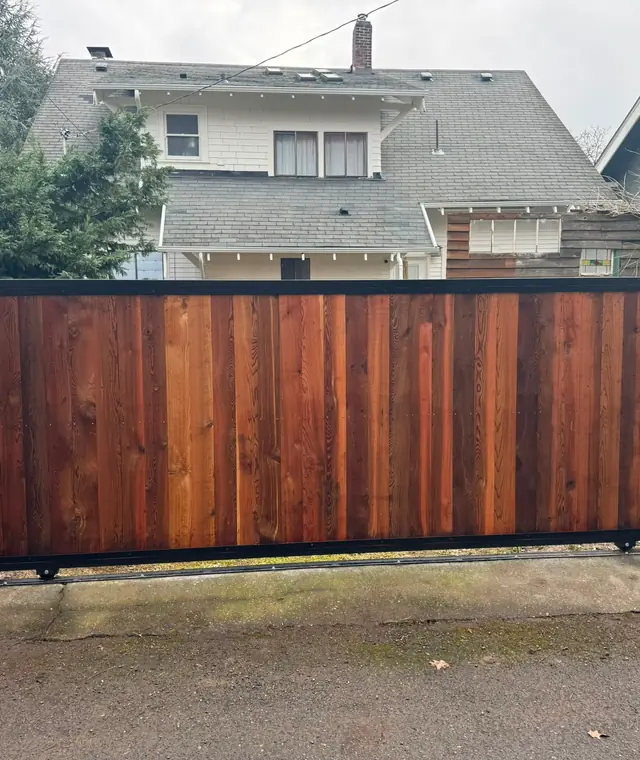
Three Plans, Sized to How Hard Your Gate Works
Every plan uses the same checklist. What changes is how often we run it, which depends on cycle count and exposure rather than on how new the gate looks.
Annual Tune-Up
One scheduled visit a year, the full checklist, and a written condition report for the property records. The right fit for newer hardware on a low-cycle residential driveway gate.
Semi-Annual Plan
A fall visit and a spring visit timed to the seasons above, plus priority scheduling in between. The cadence we recommend for most driveway gates, from the steep drives of the Portland West Hills to Felida and Salmon Creek in Vancouver.
Quarterly Commercial Plan
For HOAs, apartments, warehouses, and truck yards, where a commercial gate can run hundreds of cycles a day. Includes service documentation written for property managers and boards.
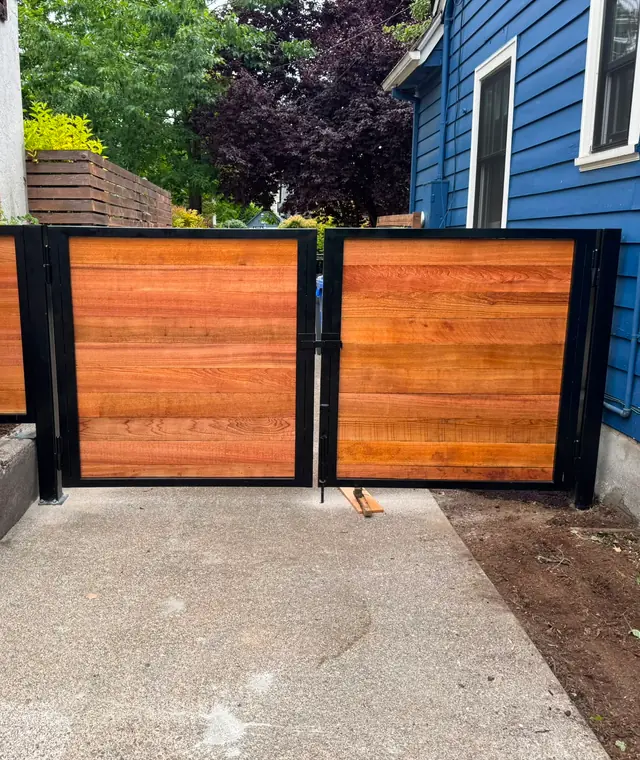
We quote each plan after seeing the gate rather than from a rate card, because a nine-hundred-pound steel slider on acreage near Battle Ground does not need the same visit as an aluminum swing gate on a city lot. The assessment doubles as the first tune-up, so the trip is never wasted.
Gate Maintenance Questions, Answered
How often should an automatic gate be serviced in the Portland–Vancouver area?
For most residential gates, twice a year: once in the fall before the heavy rains and once in the spring after the soil has finished moving. Commercial and high-cycle gates justify quarterly visits, and a newer, lightly used gate can get by with a single annual tune-up.
What does a maintenance visit actually include?
The full checklist on this page: current-draw testing on the operator, control board and limit switch inspection, battery backup and surge testing, track clearing and roller inspection, chain or rack adjustment, lubrication at every wear point, post and weld inspection, and UL 325 safety device testing. You receive a written summary of what we found.
Will a maintenance plan actually prevent breakdowns?
It prevents the wear-driven failures, which are most of them. Seized rollers, stretched chains, dry hinges, and corroded connections develop slowly and are visible months before they stop the gate. It cannot prevent a vehicle strike or a lightning surge; in those cases, it gives you a technician who already knows your gate.
Do you maintain gates and openers you didn't install?
Yes. Most of the gates on our plans were installed by someone else. We service LiftMaster, DoorKing, Nice, Apollo, Viking, FAAC, BFT, US Automatic, Mighty Mule, Eagle, and Elite operators, along with the keypads and loop detectors attached to them.
What happens if my gate fails between scheduled visits?
Plan customers receive priority scheduling during regular hours, and our 24/7 emergency dispatch is available to everyone. Because we keep a service record for every gate on a plan, the technician arrives knowing your operator model, gate weight, and history, which shortens the diagnosis.
Schedule the Tune-Up Before the Rains Do the Scheduling.
One call sets up a seasonal maintenance visit on either side of the river: Portland, Vancouver, and everywhere between.