
Why Gates Fail After a Power Outage
The storm passes, the crews work through the night, and by morning every light in the house is back on. The gate at the end of the driveway is the one thing that did not recover. It is one of the most common calls of a Portland or Vancouver winter, and it almost always traces to one of four causes.
The Restore Is Harder on a Gate Than the Outage
An outage by itself is gentle: the power drops, the operator goes dark, and the gate sits where it stopped.
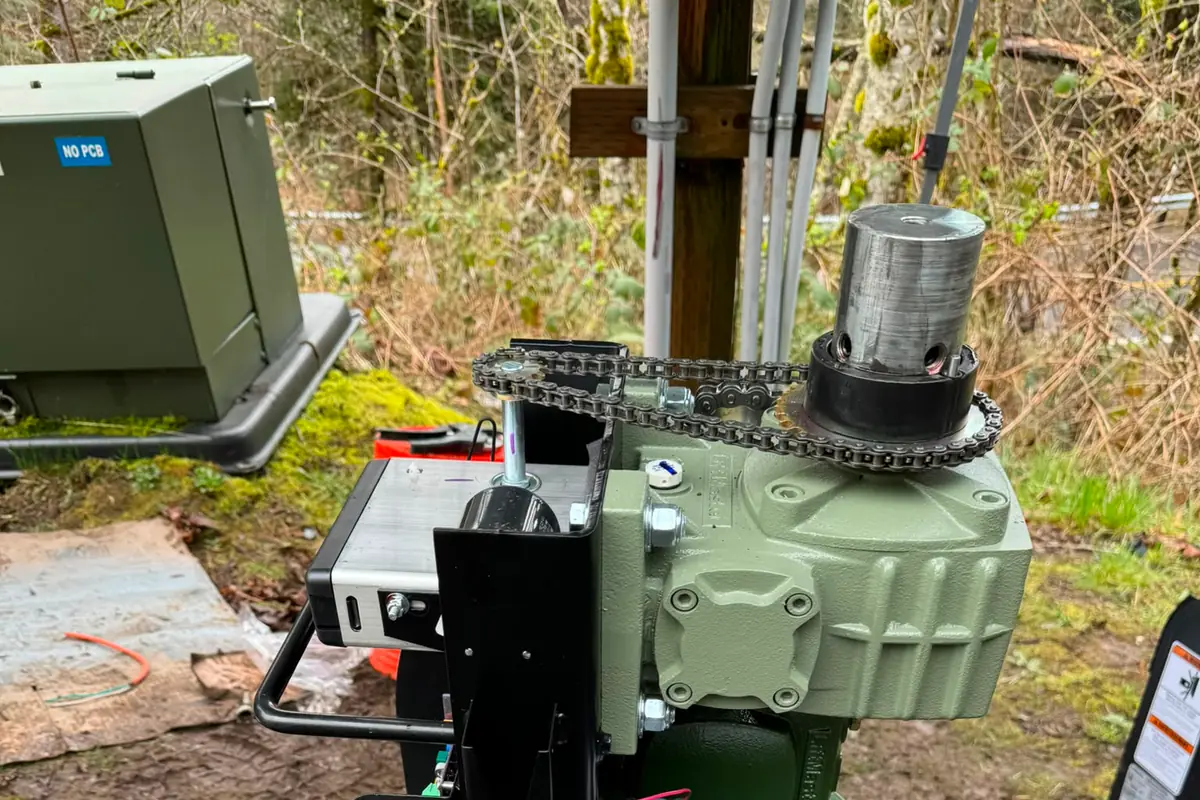
The damage happens at the edges of the event: the flickering brownouts as branches load the lines, and above all the voltage spike that can ride in when the utility re-energizes the circuit, often several times as crews work through a damaged feeder. A gate operator is poorly positioned to absorb any of that. Its brain is a control board full of low-voltage electronics, and the refrigerator shrugs off a spike that will quietly kill that board. The failure shows up in four specific ways.
1. The Surge on Restore Kills the Board
When the spike is large enough, something on the control board gives up: the transformer, a voltage regulator, a relay. Sometimes the operator is completely dead afterward. Just as often the board is only wounded: the motor still runs but ignores its remotes, or the accessory power that feeds the keypad and intercom is gone while everything else works. Strange partial behavior after an outage points at the board more reliably than total silence does.
2. The Backup Battery Aged in Silence
Battery backup is the failure that hides best. The batteries sit on a float charger for years, holding a healthy-looking voltage while their real capacity fades, and nothing tests them until the outage does. A marginal battery collapses in minutes, discharges flat, and may refuse to recover when line power returns. It was dying the whole time; the storm only published the result.
3. The Operator Lost Its Limit Positions
Every operator has to know where fully open and fully closed are. Mechanical limit switches keep that knowledge through any outage, but many modern operators track position electronically, and a hard power loss, especially combined with someone moving the gate on the manual release, can erase it. The gate runs but stops halfway, coasts past its mark, or reverses at odd places. The board is fine; it needs its limits relearned, a normal service task rather than a parts repair.
4. The GFCI Tripped and Stayed Tripped
Outdoor equipment circuits are commonly protected by a GFCI, and a storm delivers exactly the electrical chaos it reacts to. It trips, then stays tripped after the rest of the house comes back, which is why a dead gate is sometimes a thirty-second fix at the panel, the first cause worth ruling out.
What You Can Safely Check
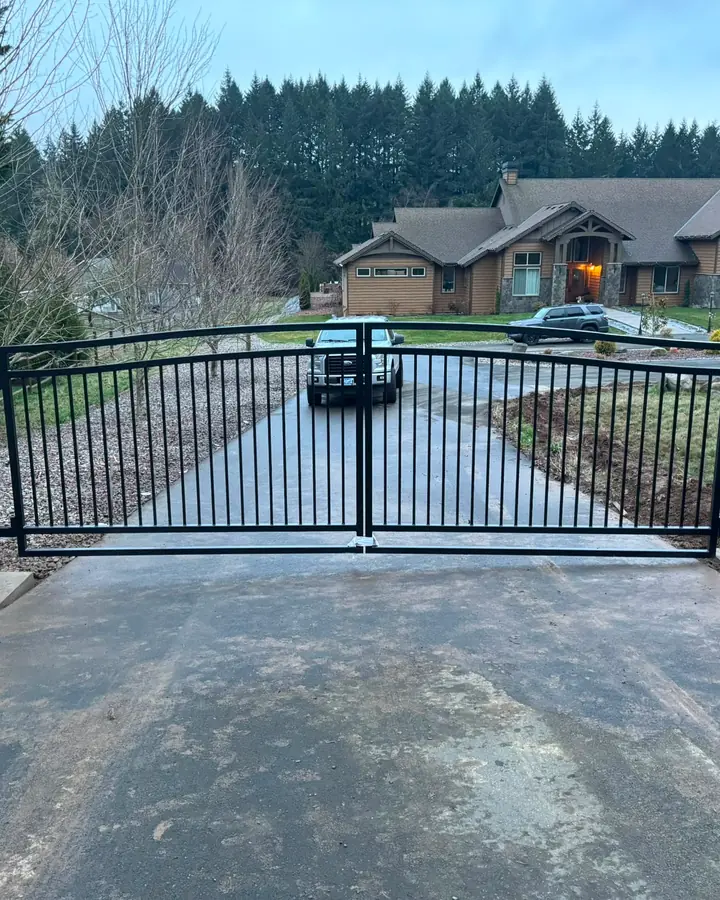
All of these checks happen at the panel or from outside the gate; the operator cabinet stays closed. See the safety notes below.
- At the electrical panel, look for a tripped breaker on the gate circuit; reset it once, firmly off and then on
- If the operator is fed from a GFCI outlet or breaker, press reset once
- If the breaker or GFCI trips again immediately, leave it off. That is a live fault, not an inconvenience
- Check whether the keypad or intercom shows any light; dead accessories on a live circuit point at the board
- Press the remote once and listen at a safe distance: a click with no movement, a hum, and total silence each mean something different
- Note where the gate stopped and whether anyone used the manual release during the outage. Both details shorten the diagnosis
Whatever you find, write it down. A report like “breaker was fine, keypad is dark, remote gets one click” tells us which parts to load on the truck.
What Not to Do While the Gate Is Down
Do not open the operator cabinet. Even with the breaker off, it can hold charged capacitors and battery terminals capable of a serious jolt. Surge diagnosis and board work belong to a technician with a meter, not a screwdriver and a flashlight.
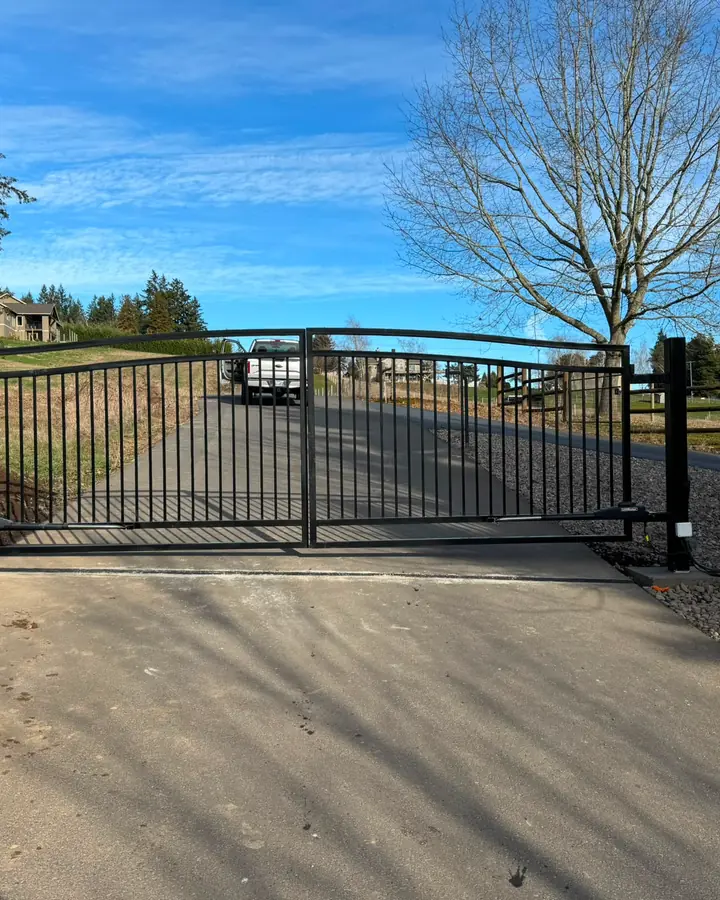
Do not push or pull a gate that has not been properly disengaged, and be careful even when it has. A released gate on a sloped driveway will roll on its own. If you need to move the gate by hand to get a vehicle out, our manual release guide covers doing it safely for each operator type. And never bypass photo eyes, safety edges, or any other UL 325 safety device to force the gate to run.
What Actually Prevents the Next One
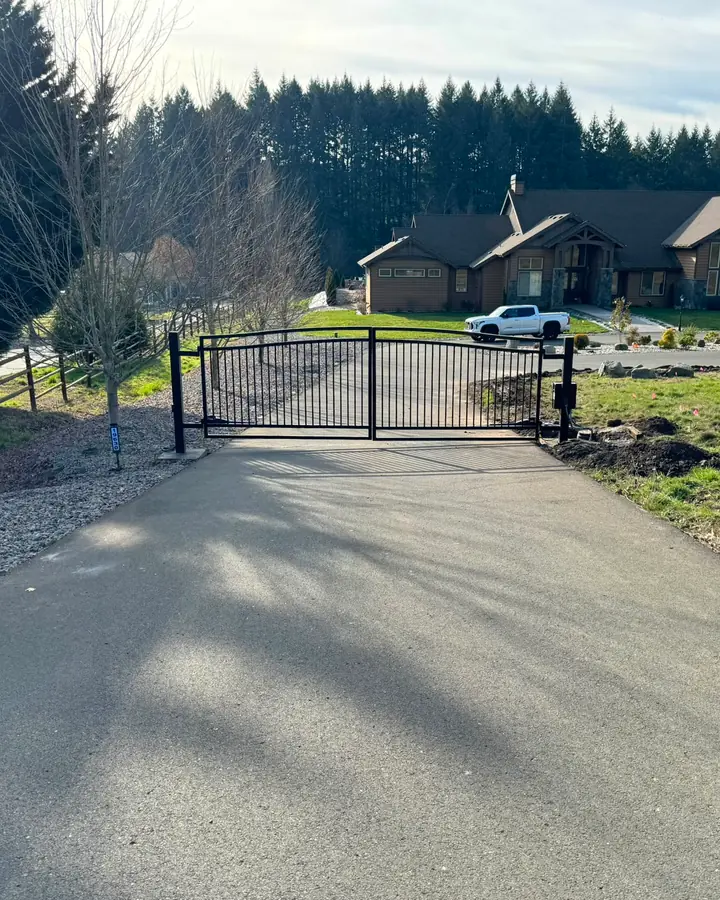
Two pieces of hardware do most of the protective work. The first is a proper surge protector on the operator’s supply: a sacrificial device, sized for the equipment and mounted at the operator, that absorbs the spike so the control board does not have to. The second is a battery replacement schedule: backup batteries should be load-tested rather than trusted, and replaced on age rather than on failure.
Both are standard checks in our seasonal gate maintenance plans: before storm season we load-test the batteries, verify the surge protection, and confirm the limits and safety devices. Given how the east wind treats the lines out toward Gresham, and how often the rural feeders around Battle Ground drop in a good windstorm, that fall visit earns its keep.
When the Board Is Gone
If the panel checks out, the accessories are dark, and the operator stays silent or erratic, the surge most likely took the control board, and no amount of resetting will bring it back.
The honest news is that a killed board rarely means a killed operator. Board replacement is one of the most routine repairs we do under gate opener and motor repair, with boards stocked for LiftMaster, DoorKing, Nice, Apollo, Viking, and FAAC. And we will tell you plainly when an older unit is not worth a new board.
If the gate failed in a position you cannot live with (stuck closed with cars trapped behind it, or standing open to the street), that is what our 24/7 emergency gate repair dispatch exists for, on both sides of the river. For more field guides like this one, see the rest of our gate owner resources.
Gate Dead Since the Storm?
We diagnose surge damage, replace boards and batteries, and get gates moving again in Portland and Vancouver.