
How to Use Your Gate’s Manual Release
When the power fails or the operator quits, the manual release turns your automatic gate back into a plain gate, one you can move by hand. Every operator has one; far fewer owners know where theirs is or the rules that keep a freed gate under control. Here is the general case; your unit’s label has the specifics.
- Slide & swing operators
- Outage-ready in five minutes
- Portland & Vancouver
What the Manual Release Actually Does
An operator holds your gate through its drive train: a gearbox, a chain or rack, or an arm bolted to the leaf.
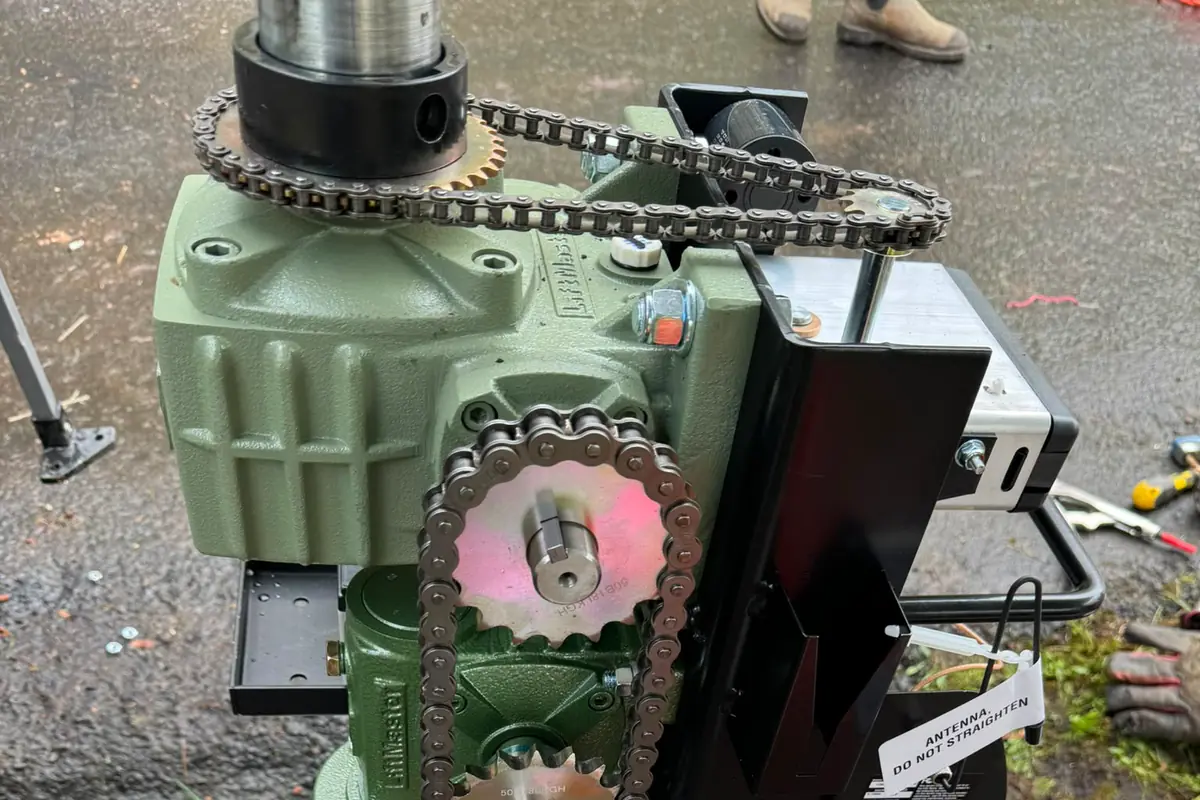
That connection keeps the gate from being pushed open by hand, and it also keeps you from moving the gate when the power fails or a control board or motor dies. The manual release is a deliberate weak link in that chain: turn a key, operate a lever or pin, and the gate is decoupled from the drive so it swings or rolls freely.
The release repairs nothing; it simply hands the gate back to you so a dead operator does not trap a car in the driveway. Around here it earns its keep most often during winter outages, common enough that we wrote a separate guide to gates that fail after a power outage.
Where the Release Lives
Placement varies by brand and model. The patterns below cover most units from LiftMaster, DoorKing, Nice, Apollo, Viking, FAAC, and the other lines we service, but treat them as a starting point, not a substitute for the manual.
On Slide Gate Operators
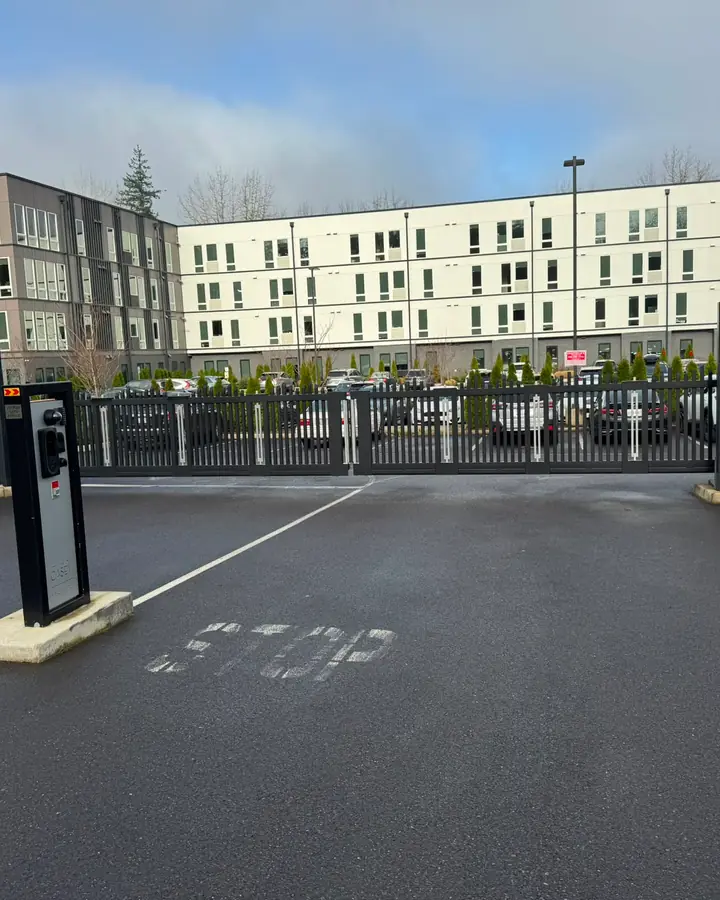
A sliding gate operator is the boxy unit beside the track. The release is usually a keyed lever or wrench-operated bolt on the housing that disengages the drive sprocket or gearbox clutch; on some units it is a pin that lets the chain go slack. Once released, the gate rolls by hand along its track.
On Swing Gate Operators
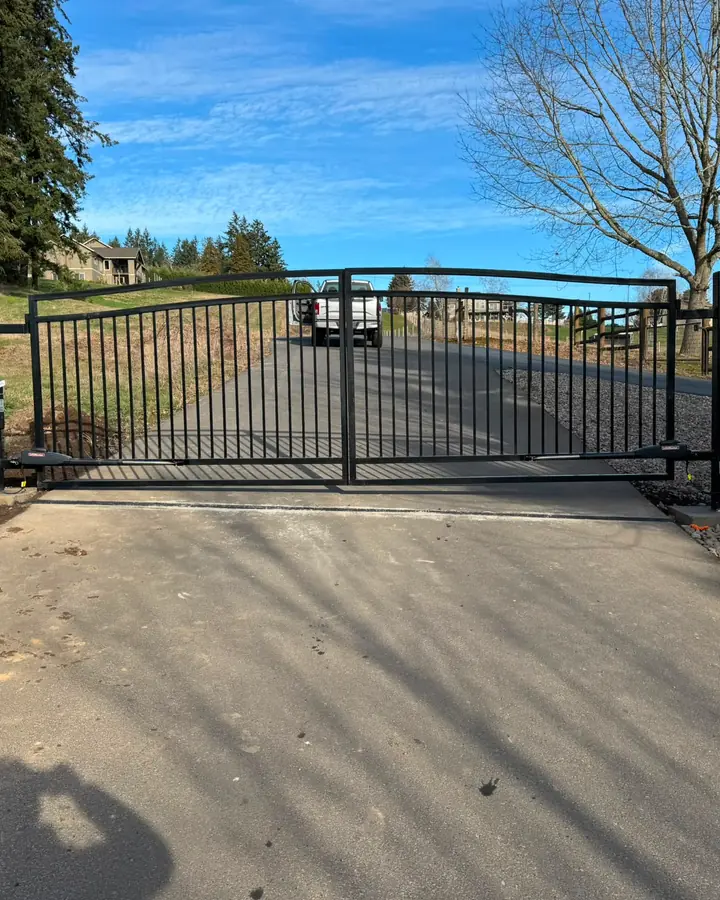
A swing gate is driven by an arm or ram actuator between the post and the leaf, or by an underground operator at the hinge point. The release is typically a keyed cover or lever on the actuator body; some designs use a removable pin where the arm meets the leaf. On dual-leaf gates, each actuator has its own release. Freeing one leaf does not free the other.
The General Steps
The exact motion differs by unit; the sequence is nearly universal.
- Find the release key today, before you need it, and stage a spare you can reach in the dark
- If power is still on and the breaker or disconnect is safely accessible, switch the operator off first
- Unlock and operate the release exactly as the unit’s label describes, firm and smooth, never forced
- Move the gate slowly, keeping clear of the track, the swing path, rollers, and hinge points
- Secure the gate with a chain and padlock if it must stay put; nothing else is holding it
- Re-engage the release before restoring power and returning the gate to automatic use
A healthy gate moves with moderate effort once released. If it takes real strain, stop. The fault is in the hardware, and forcing it risks the gate and your back.
Three Safety Rules That Are Not Optional
Know where the key is before the outage. Manual releases are almost always keyed, because a release anyone can reach defeats the gate. The failure we see constantly is not a broken release. It is a key nobody can find, at night, in the rain, with a car on the wrong side of the gate. Locate the key now, confirm it turns, and tell everyone on site where it lives.
Never force a gate while the operator is engaged. If the release has not been operated, the gate is still coupled to the gearbox, and gears designed to push a gate strip quickly when the gate pushes them. Many stripped gear kits and bent actuator arms began as an engaged gate muscled open during an outage.
Mind the slope. An engaged operator is also the gate’s brake. Release a gate on a sloped driveway and gravity takes over: several hundred pounds of steel can start rolling or swinging on its own. Clear people and vehicles from the travel path first, control the gate the whole time, and chain it in place if it must hold position on a grade.
Two boundaries beyond those rules: the release is the only part of the operator meant for your hands, so leave the cabinet and its wiring closed. And if the gate is bound, jammed, or under visible tension (a derailed slide gate leaning on its posts, say), do not release it at all, because freeing a loaded gate can let it fall. That is service work, not owner maintenance.
The Release Is a Bridge, Not a Fix
Using the manual release solves the next ten minutes, not the failure behind it; a gate left on release is effectively unlocked.
If the cause was an outage, the gate may only need power restored and the release re-engaged. If the operator is silent, clicking, or humming with power present, one specific component has failed, and finding it is our daily diagnostic work. For a gate stuck closed with a vehicle trapped, or stuck open with the property exposed, our 24/7 emergency gate repair line dispatches on both sides of the river.
One habit prevents most bad versions of this story: test the release once or twice a year. A release that has never been operated corrodes in place, which is why we cycle and lubricate it on every visit under our gate maintenance plans. More owner guides live in the Gate Owner Resources library.
Manual Release Questions
Should I turn off power to the operator before using the manual release?
Yes, if you can do it safely at the breaker or a disconnect switch. With power off, the operator cannot start while you are moving the gate by hand. If the power is already out, re-engage the release or keep clear of the gate before the circuit comes back.
My release key is missing or the mechanism will not turn. What should I do?
Do not force it. A seized release is usually corrosion inside the lock cylinder or the mechanism, and forcing the key snaps it off in the worst possible place. Freeing a stuck release and supplying replacement keys is routine service work, usually finished in one visit.
Released the Gate? Now Let’s Fix It.
The manual release buys you time. We diagnose the failure behind it, on both sides of the river.